
You’re sitting on the couch watching a video from someone halfway around the world. No cords, no plugs, and certainly no ocean in sight. Yet that video may have reached you by traveling through a tiny strand of glass at the bottom of the Atlantic Ocean.
For all our talk about Wi-Fi, wireless technology, and storing things in “the cloud,” much of our digital world depends on something decidedly less glamorous: undersea internet cables.
Table of Contents
According to the International Telecommunication Union (ITU), these cables carry more than 99% of international data traffic. Some lie beneath miles of seawater, and somewhere in the world, several need repairing in an average week.
What fascinated me most while researching this wasn’t just how often these cables break. It was how people manage to fix them and why most of us never notice when something goes wrong.
Wait, The Internet Is A Garden Hose?
Pretty much, at least in terms of size.
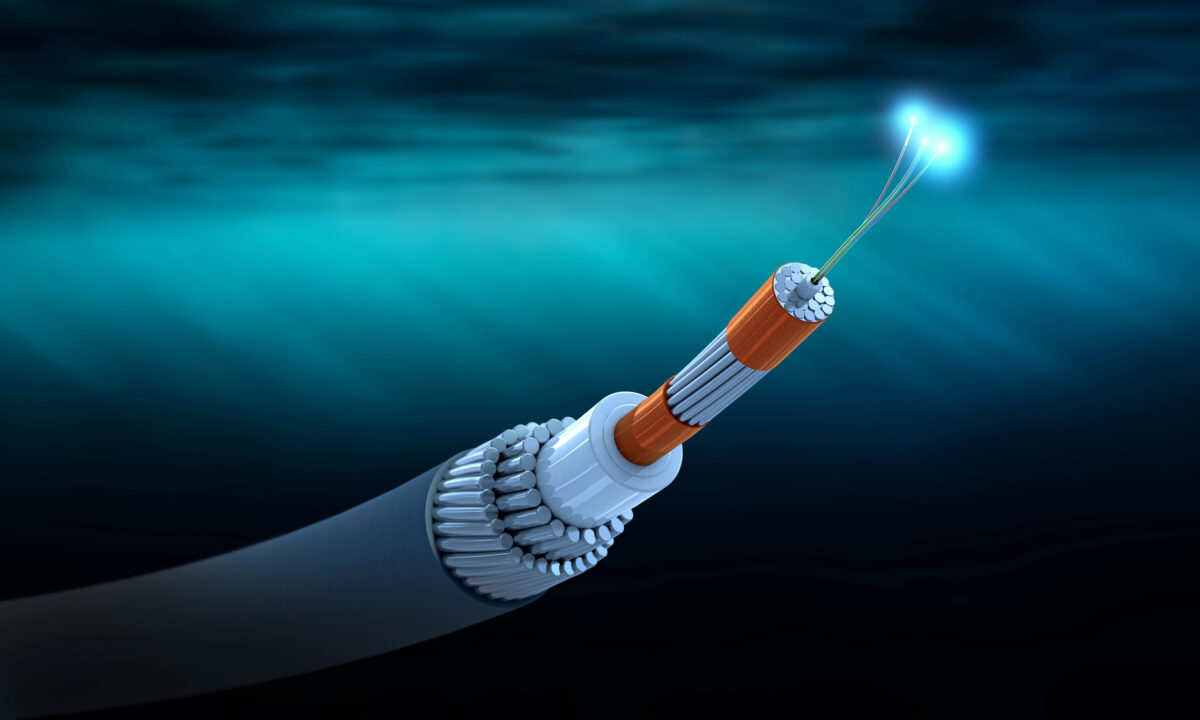
You might picture enormous metal pipes snaking across the ocean floor, but most of an undersea internet cable’s length is about as thick as an ordinary garden hose. One lightweight deep-sea cable manufactured by Nexans measures just three-quarters of an inch across.
Even more surprising is how little of that cable actually carries your data. The glass fibers at its center are roughly the thickness of a human hair. Most of what surrounds them is there to keep those delicate strands intact.
What’s Actually Inside An Undersea Internet Cable?
At the heart of the cable are optical fibers made from exceptionally pure glass. Lasers send pulses of light through these fibers, carrying everything from family photos and bank transfers to the questionable videos your friends send you at midnight.
Getting those tiny strands of glass safely across an ocean requires several layers of protection.
| Cable Component | What It Does |
|---|---|
| Optical fibers | Carry information as pulses of light |
| Steel strength wires | Help the cable withstand pulling forces |
| Copper conductor | Supplies electricity to signal amplifiers |
| Polyethylene insulation | Provides electrical insulation and protection from seawater |
| Additional steel armor | Protects against anchors, fishing equipment, and rough terrain |
Not every cable needs the same amount of protection. In the deep ocean, lightweight cables can often rest directly on the seabed. Closer to shore, where fishing boats and cargo ships are more common, cables need heavier armor and are often buried beneath sediment.
Oddly enough, the deepest parts of the ocean are generally safer for these cables than the relatively shallow waters near our beaches.
How Does Light Travel Thousands Of Miles?
Glass may be transparent, but even exceptionally pure glass gradually weakens a light signal over long distances.
To keep the signal going, engineers install devices called repeaters at intervals along long-distance cables. Think of them as little boosting stations scattered across the ocean floor.
The copper conductor inside the cable supplies electricity to these sealed amplifiers from shore. Each repeater strengthens the optical signal so it can continue its journey.
There’s something remarkable about the fact that a video can travel thousands of miles through glass, cross an ocean in a fraction of a second, and arrive on your phone while you’re still deciding whether it’s worth watching.
How Do Undersea Internet Cables Break?
You’d think that spending decades beneath miles of seawater would expose internet cables to all sorts of extraordinary dangers. Crushing pressure, powerful underwater currents, perhaps even the occasional hungry sea creature.
In reality, we’re usually the problem.
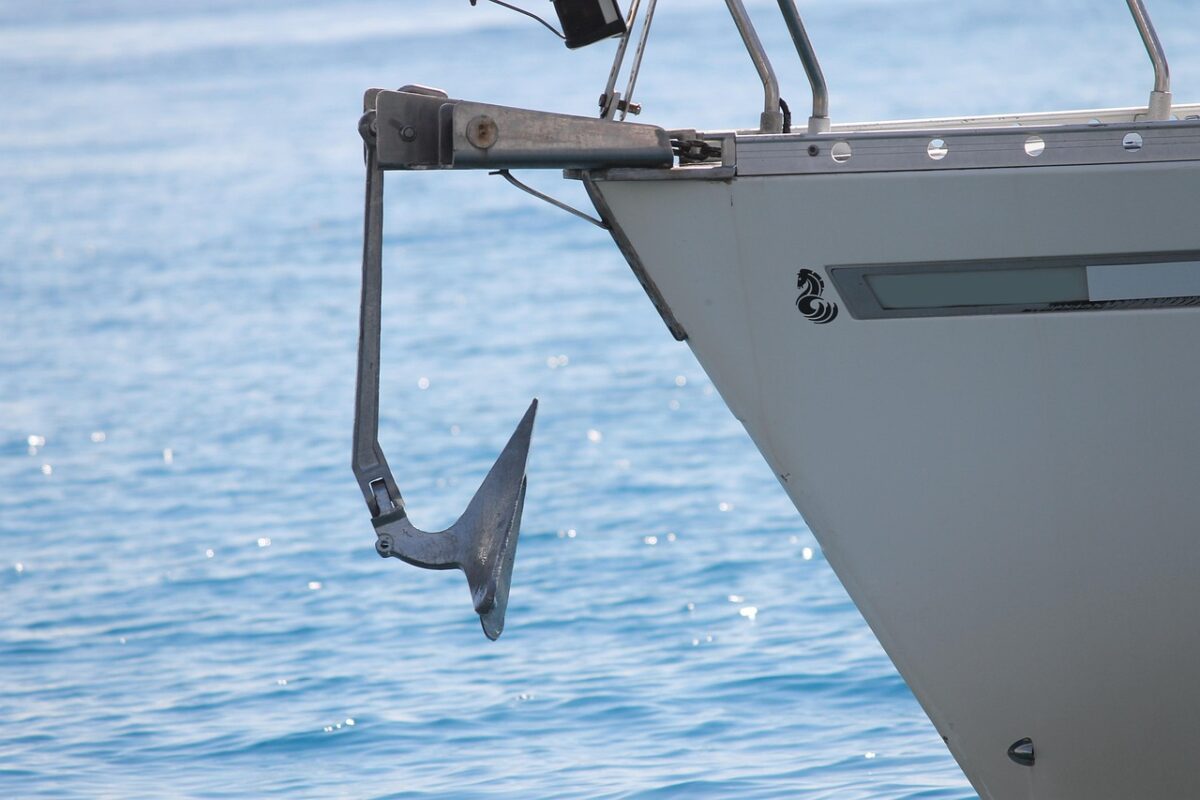
Fishing boats and ship anchors do far more damage to the world’s submarine cable network than most of the hazards lurking in the deep ocean.
The ITU reports that more than 200 submarine cable repairs were recorded worldwide in 2023 and more than 170 in 2025.
That’s more than three repairs a week in 2025 alone.
Fishing Equipment And Ship Anchors
Fishing and anchoring account for the majority of submarine cable faults.
Commercial fishing vessels sometimes drag heavy equipment along the ocean floor. If that equipment catches a cable, it can crush, stretch, or sever it.
Ship anchors pose a similar risk. An anchor dragged across the seabed can damage cables, particularly in busy coastal waters.
At great depths, where anchors and most fishing equipment can’t reach them, they’re generally safer from human interference.
Earthquakes, Landslides, And Volcanoes
The ocean floor isn’t nearly as still as it might appear.
Earthquakes can shift the seabed, while underwater landslides send enormous amounts of sediment moving downhill. Scientists call some of these sediment flows turbidity currents. Think of an avalanche happening underwater.
A single event can damage several cables crossing the same area.
In March 2024, a suspected underwater rockslide off the coast of Côte d’Ivoire knocked four submarine cables out of service, disrupting internet connectivity across 13 African countries.
Volcanic eruptions can be equally destructive. In January 2022, the eruption of the Hunga Tonga-Hunga Ha’apai volcano severed Tonga’s only international submarine cable.
Do Sharks Really Bite Internet Cables?
Of all the creatures you might blame for a slow internet connection, sharks probably aren’t high on your list. But footage of sharks investigating and biting underwater cables has helped fuel a surprisingly persistent internet myth.

Records from the International Cable Protection Committee (ICPC), cited by TeleGeography, show no cable faults attributed to fish bites between 2007 and 2014.
Sharks have enough of a reputation without being blamed for buffering videos, too.
A fishing boat is a far greater threat to your internet connection than a curious shark.
Could Someone Be Cutting Cables On Purpose?
Several incidents in the Baltic Sea and around Taiwan have raised concerns about deliberate damage to communications infrastructure.
Determining whether damage was intentional, however, is difficult.
In December 2024, the oil tanker Eagle S was accused of damaging four telecommunications cables and a power cable in the Gulf of Finland. A Finnish court dismissed the criminal case on jurisdictional grounds in October 2025. The crew denied the charges.
In February 2023, two cables connecting Taiwan’s Matsu Islands to the main island were severed within six days of each other. Authorities attributed the damage to Chinese vessels but did not establish that it was intentional.
Evidence that a ship damaged a cable doesn’t automatically tell investigators why it happened.
Although deliberate interference is a legitimate security concern, ordinary fishing and shipping activity remains responsible for most cable faults.
What Happens To Your Internet When A Cable Snaps?
Most of the time, absolutely nothing that you’ll notice.
Internet providers distribute traffic across multiple connections. When one cable goes down, information can often take a different route, much like your GPS finding another way home when the highway is closed.
When one cable goes down, information can often take a different route, much like your GPS finding another way home when the highway is closed.
The detour may take a little longer, increasing what’s known as latency. You might experience a lag during an online game or find yourself staring at a frozen coworker during a video call.
But the internet hasn’t stopped working. Your data has simply taken the scenic route.
The extra distance or congestion may increase latency, the time it takes for information to travel between two points. You might notice a slower download, a lag during an online game, or a brief delay during a video call.
In September 2025, cable cuts in the Red Sea forced some internet traffic onto alternative routes. Microsoft reported increased latency for certain connections, but its Azure cloud services continued operating.
What If There’s No Other Cable?
Some countries, particularly small island nations, depend on a single international submarine cable. If that cable breaks, there may be no comparable connection available.
Tonga experienced this firsthand following the 2022 volcanic eruption.
The country’s international connection depended on a cable stretching approximately 514 miles. When it was severed, communicating with relatives overseas, coordinating disaster relief, and conducting international business suddenly became much harder.
Satellite connections provided some emergency communications, but they couldn’t replace the country’s normal internet service.
It took five weeks to restore the cable.
A year later, around 14,000 residents of Taiwan’s Matsu Islands faced a similar problem. After both of their submarine cables were severed, residents endured 50 days of limited internet service.
Even countries with multiple connections aren’t necessarily protected. If several cables follow the same geographic corridor, a single underwater landslide or other incident can damage them simultaneously.
Having three cables isn’t much of an advantage if all three break in the same place.
How Do You Repair A Cable At The Bottom Of The Ocean?
Given all the sophisticated technology involved in transmitting data across an ocean, the method for repairing a broken cable sounds surprisingly old-fashioned.
Crews fish it out of the water.
Getting the cable to the surface is only half the challenge. Technicians then have to reconnect delicate strands of glass aboard a ship in the middle of the ocean.
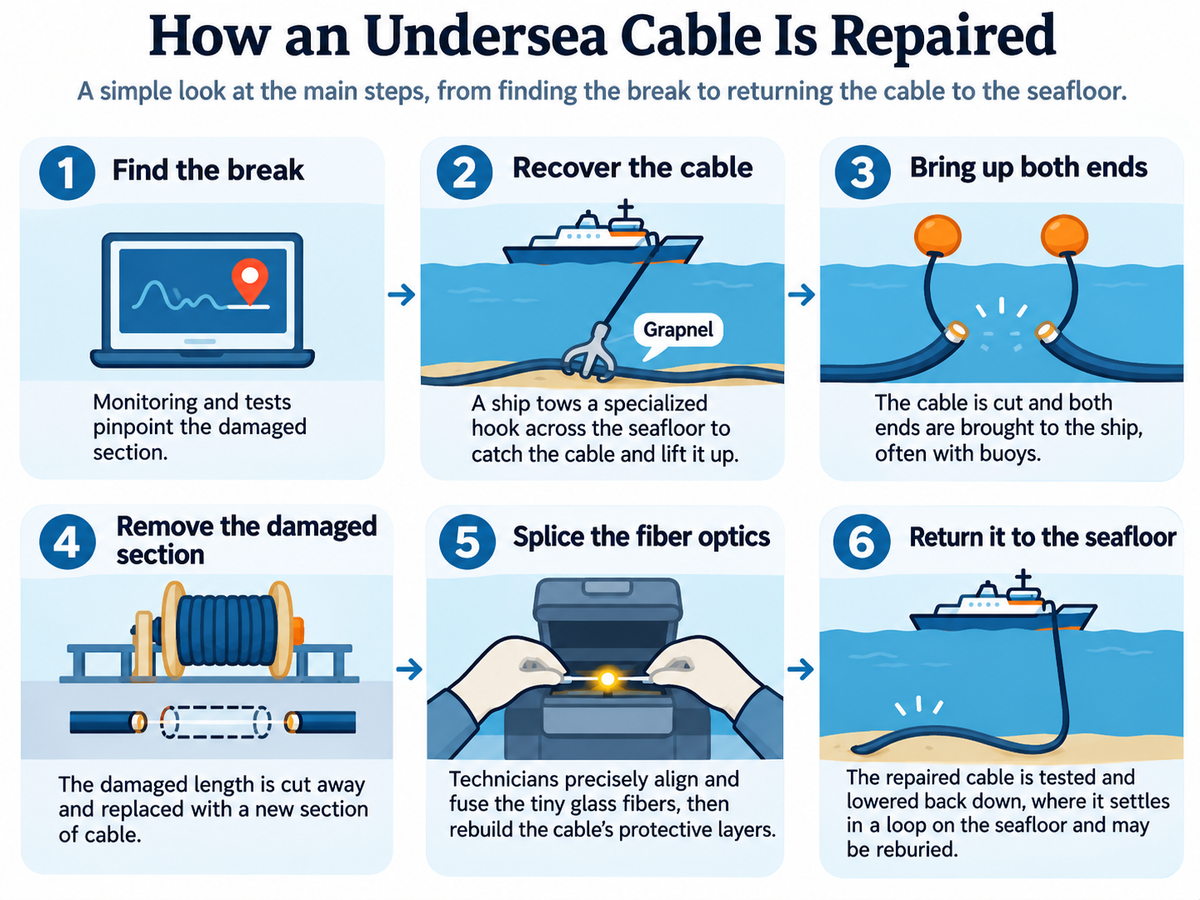
Here’s how a typical repair works.
1. Find The Break
Equipment at cable landing stations continuously monitors the connection. When something goes wrong, engineers use electrical or optical tests to estimate how far along the cable the damage has occurred.
One method works a bit like shouting into a canyon. By measuring how long it takes a reflected signal to return, engineers can estimate the distance to the fault.
A specialized repair ship then heads to the area carrying spare cable, recovery equipment, and technicians.
2. Go Fishing For The Cable
In deep water, crews often use a specialized hook called a grapnel. The ship tows it across the seabed until it catches the cable, which is then slowly hauled toward the surface.
In shallower waters, crews may use remotely operated vehicles (ROVs). These underwater robots can inspect damaged cables and assist with recovery, particularly when cables are buried beneath sediment.
3. Cut The Cable And Recover Both Ends
It may sound counterproductive, but repairing a damaged cable sometimes involves cutting it completely in two.
Separating the cable on the seabed reduces the strain placed on it during recovery and allows crews to bring each end to the surface independently.
One end may be temporarily secured to a buoy while the ship retrieves the other.
4. Remove The Damaged Section
Once the cable is brought aboard, technicians cut away the damaged portion and prepare the remaining ends.
They insert a new length of spare cable rather than simply reconnecting the original ends. That extra length provides enough slack to complete the repairs aboard the ship and return the cable safely to the ocean floor.
5. Fuse The Tiny Glass Fibers
Inside a clean, controlled workspace known as the jointing room, technicians strip back the cable’s protective layers to expose the optical fibers.
Using a process called fusion splicing, they precisely align two glass fibers and use an electric arc to fuse their ends together. Each fiber must be individually reconnected with minimal loss of the light signal.
Technicians also reconnect the electrical conductor and rebuild the cable’s structural and protective layers.
It’s remarkably delicate work for something that will spend years lying beneath thousands of feet of seawater.
6. Send The Cable Back To The Ocean Floor
Once the connections have been tested and sealed inside protective housings, crews carefully lower the repaired cable into the water.
Because the replacement section adds extra length, the cable settles onto the seabed in a curved loop known as a bight.
In shallow waters, an underwater robot may use high-pressure water jets to loosen the sediment and rebury the cable, protecting it from future damage.
How Long Does It Take To Repair An Undersea Internet Cable?
A straightforward repair may take a few weeks. Difficult repairs can stretch into months.
Joining the glass fibers is only one part of the job. Much of the time can be spent getting a ship to the right location and obtaining permission to begin work.
Several factors affect repair times:
- Ship availability: A suitable repair vessel may already be working elsewhere.
- Travel distance: Reaching a remote stretch of ocean can take days.
- Replacement materials: Crews may need to collect compatible spare cable and equipment.
- Government permits: Ships often need authorization to conduct repairs in national waters.
- Weather: Rough seas can make cable recovery dangerous.
- Seabed conditions: Landslides and other disturbances can bury or displace damaged cable.
Following the March 2024 cable failures off West Africa, individual repairs took between 30 and 43 days, according to TeleGeography.
Repairs can become even more complicated in conflict zones. Three cables damaged in the Red Sea in February 2024 remained out of service for months amid difficulties obtaining repair permits.
There Aren’t Many Ships That Can Do This
With roughly a million miles of communications cable lying beneath the world’s oceans, you’d expect a sizeable fleet of ships dedicated to keeping it all working.
There isn’t.

In 2026 testimony to the U.S.-China Economic and Security Review Commission, Rear Admiral Mike Brookes estimated that around 65 ships worldwide work with fiber-optic submarine cables. Only about 20 are primarily assigned to repairs.
And many of those ships are getting old.
TeleGeography estimates that roughly 65% of cable maintenance vessels will reach the end of their expected service lives within 15 years.
Unlike calling someone to fix the Wi-Fi at home, there’s no guarantee that a suitable repair crew is anywhere nearby. Some countries have several submarine cables coming ashore but no locally stationed repair vessel.
Building more cables won’t solve every problem if we don’t have enough ships to maintain them.
How Do You Lay A Cable Across An Ocean In The First Place?
A new submarine cable system can take more than two years to plan, manufacture, install, and activate, according to the ITU.
Specialized ships carry enormous lengths of cable coiled inside their holds. As they travel along a carefully planned route, equipment feeds the cable into the water at a controlled rate.
Getting it there involves four main stages.
1. Survey The Ocean Floor
Survey ships map the proposed route long before installation begins.
Engineers look for earthquake fault zones, steep underwater slopes, fishing grounds, anchoring areas, and other potential hazards.
The shortest route across an ocean isn’t necessarily the safest.
2. Bring The Cable Ashore
Installation typically begins with connecting the cable to land.
Crews bring the heavily armored shore end of the cable onto a beach or through another designated landing point.
From there, it connects to a cable landing station, which houses the equipment linking the submarine system to communications networks on land.
3. Bury The Cable In Shallow Water
As the ship moves farther offshore, crews may use a specialized underwater plow.
The plow creates a narrow furrow in the seabed, guides the cable into it, and allows sediment to cover the cable.
Depending on conditions, cables may be buried as deep as 10 feet. Rocky terrain can make burial difficult or impossible.
4. Lower The Cable Into Deep Water
Beyond the continental shelf, there’s generally less risk from anchors and fishing equipment.
Here, crews can often allow the cable to settle directly onto the ocean floor. Some submarine cables lie beneath roughly 26,000 feet of water.
Despite spending decades in darkness, under enormous pressure and surrounded by saltwater, these cables are designed to have a service life of at least 25 years.
Some are retired sooner because newer systems can carry more data at a lower cost.
We’ve Been Wiring The Ocean Since Before The Telephone
Laying communication cables across the ocean might sound like a relatively modern invention, but we’ve been doing it since the days of horse-drawn carriages.
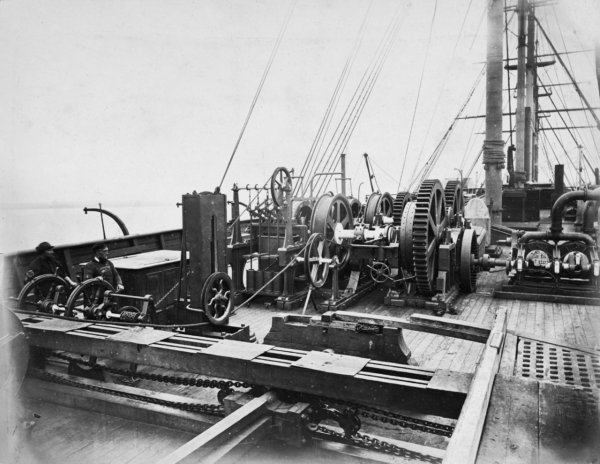
The first transatlantic telegraph cable began operating in 1858, although it failed after just a few weeks. A more durable connection followed in 1866, allowing messages to cross the Atlantic in minutes rather than spending days or weeks aboard a ship.
We’ve gone from Morse code to streaming movies, but nearly 170 years later, we’re still connecting continents using the same basic idea.
How Much Of The Internet Really Runs Underwater?
Wi-Fi gets information from your device to a nearby network. Cell towers allow your phone to communicate wirelessly over greater distances.
But when information needs to cross an ocean, it will almost certainly travel through physical cables.
As of September 2026, TeleGeography tracked:
- 607 submarine cable systems in service
- 102 additional cable systems planned
- 1,893 cable landing stations represented on its 2026 printed map
Altogether, the network stretches roughly a million miles beneath the world’s oceans.
These aren’t just cables carrying funny cat videos and social media posts. They also carry financial transactions, medical information, government communications, business records, and data moving between the servers we collectively refer to as the cloud.
Where Do All These Cables Come Ashore?
Cable landing stations tend to cluster around major cities, convenient ocean crossings, and geographically narrow passages.
This arrangement helps reduce construction costs, but it can also create vulnerabilities when several systems share the same corridor or coastline.
You can see how interconnected the network has become by exploring TeleGeography’s interactive Submarine Cable Map.
Pick a country and see where its underwater connections lead. The number of cables crossing certain stretches of ocean is remarkable.
Why Big Tech Is Building Its Own Undersea Cables
For decades, telecommunications companies often worked together to share the considerable cost of building submarine cable systems.
Today, Google, Meta, Microsoft, and Amazon are among the technology companies investing heavily in their own cable infrastructure.
TeleGeography’s State of the Network 2026 report found that content and cloud networks accounted for nearly three-quarters of international bandwidth demand in 2024.
These companies move enormous amounts of information between their data centers. Investing in cables gives them greater control over the capacity and cost of those connections.
But private investment naturally follows demand. A busy route connecting major data centers may attract several competing cable projects, while a remote island with a small population struggles to secure a second connection.
Couldn’t Satellites Just Do This Instead?
We’ve figured out how to deliver internet access from space, yet we’re still sending ships across oceans to lay cables on the seabed.
It seems a little backward, doesn’t it?
The problem is scale. Providing internet access to a farmhouse miles from the nearest town is a very different job from moving enormous amounts of data between continents.
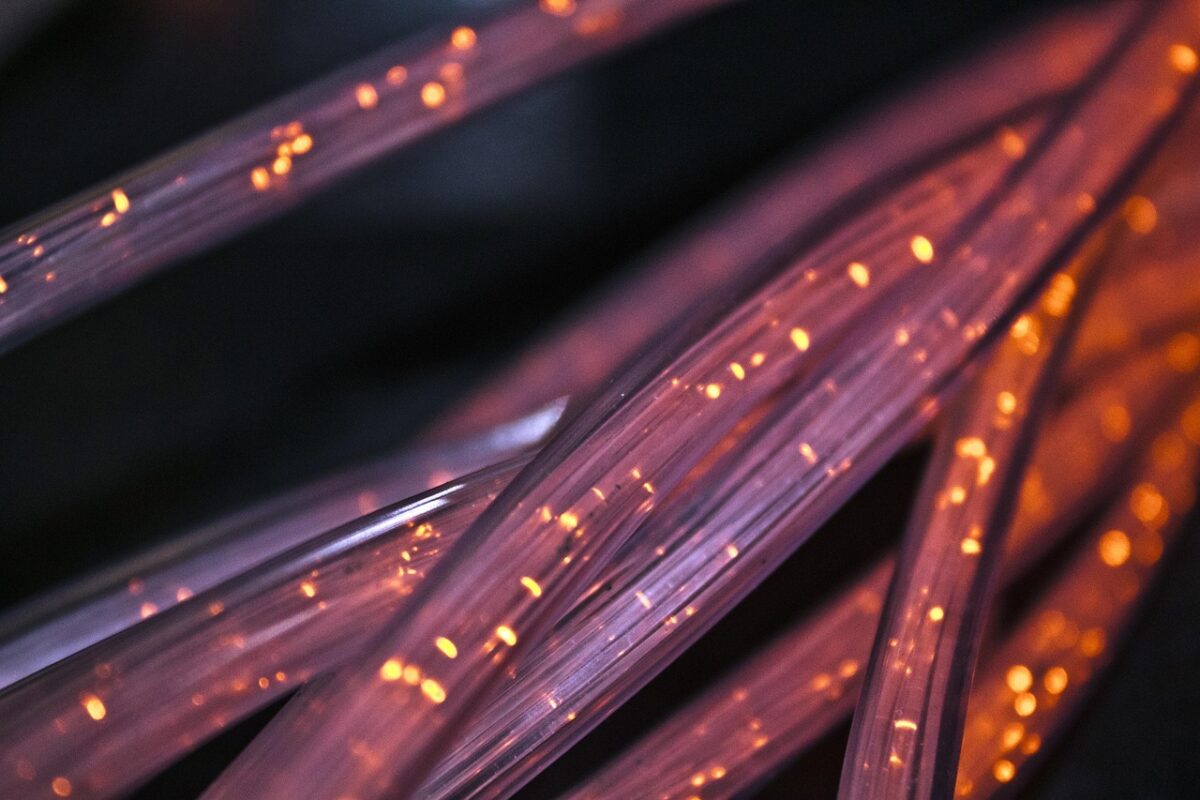
Fiber-optic cables are particularly good at the latter. Engineers can send multiple wavelengths, or colors, of light through a single strand of glass simultaneously. Put several pairs of those fibers inside one cable, and the amount of information they can carry is extraordinary.
Consider MAREA, a transatlantic cable co-owned by Microsoft and Meta. TeleGeography puts its capacity at 224 terabits per second.
That’s 224 trillion bits of information traveling through a single cable every second at its stated capacity.
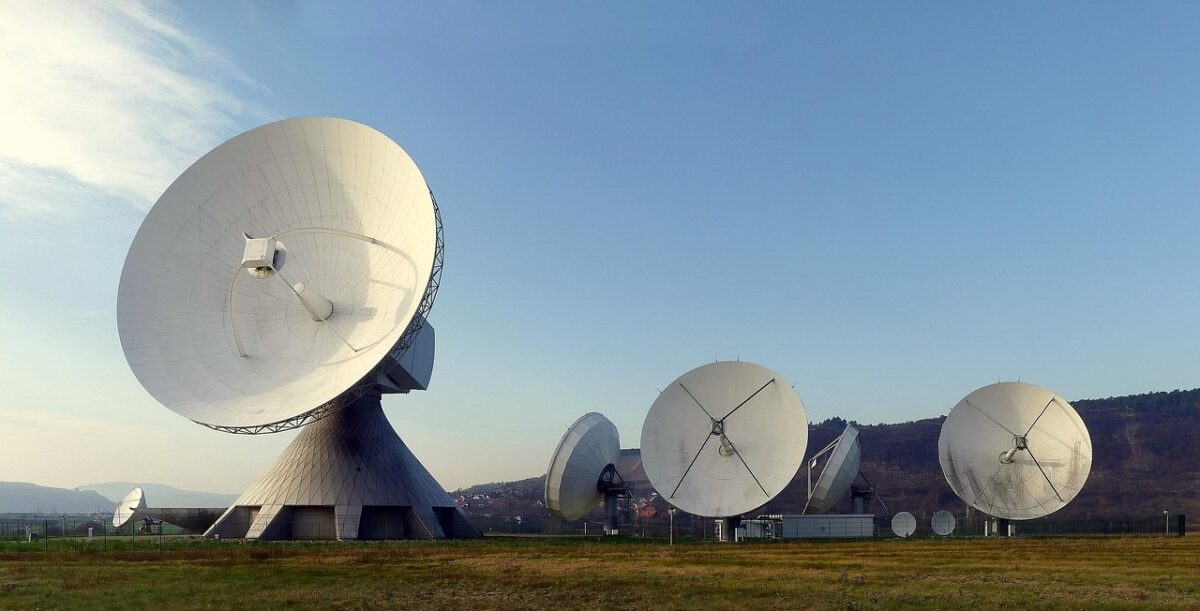
Satellites transmit information using radio signals and, in some systems, optical links between satellites. Available capacity must be shared among the users and connections they serve.
Radio signals aren’t just useful for communicating across our own planet. Scientists also use them in the search for extraterrestrial life, listening for possible signs of intelligent civilizations far beyond Earth.
They excel at reaching places where building terrestrial infrastructure is difficult, including remote communities, ships at sea, and disaster zones.
Low-Earth-orbit satellites have also improved connection speeds and latency compared with many older satellite systems.
However, supplying a remote household with internet access is a very different challenge from carrying the enormous volume of data exchanged between continents.
Satellite technology and undersea cables are complementary. One provides flexibility and access where physical connections are difficult. The other provides the massive capacity needed to support much of the world’s international communications.
How Fragile Is The Internet?
For much of the world, the network beneath the ocean is remarkably dependable. Cables break regularly, repair ships head out to sea, and we carry on with our lives without noticing.
But that reliability isn’t shared equally.
A technology company with several international connections can redirect traffic and continue operating. A small business on an isolated island may lose access to customers, payments, and suppliers for weeks.
Keeping the world connected takes more than laying new cables across the ocean. Several weaknesses in the existing network deserve attention:
- An aging repair fleet. New cables need to be accompanied by investment in the ships and crews that maintain them.
- Communities with a single connection. Additional cables following independent routes could provide essential backup.
- Complicated repair permits. Delays in authorization can leave communities waiting weeks longer than necessary for service to return.
- Unclear legal accountability. Establishing responsibility for damage at sea remains a difficult challenge, whether the damage was accidental or deliberate.
We already recognize the importance of backup systems for electricity grids, water supplies, and other essential services. International internet connections deserve similar consideration, regardless of how profitable a particular route happens to be.
For all the talk about clouds, wireless connections, and increasingly sophisticated technology, the internet still depends on glass, metal, ships, and people who know how to fix things.
The cloud, it turns out, has an awful lot of hardware at the bottom of the ocean.
Have you ever lost internet access for days or even weeks? Share what happened and how you managed in the comments.
There’s More Going On Behind The Scenes
Who knew the internet involved so much heavy lifting? It’s hardly the only modern convenience with a surprising story behind it.
From the hidden water consumption of our everyday habits to the underground tunnels and engineering mishaps at Denver International Airport, there’s a remarkable amount of infrastructure most of us never see.
And if you think repairing cables at the bottom of the ocean sounds extraordinary, wait until you discover some of the technology developed in secret at Area 51.